
-
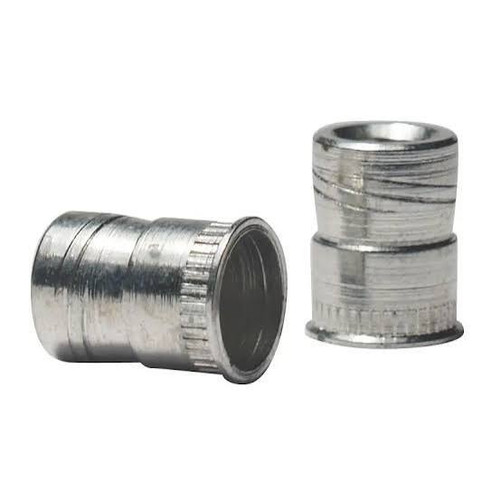
6-32 Steel Thread-Sert (.093+ Grip)
SKU: TSS632
$0.510each -
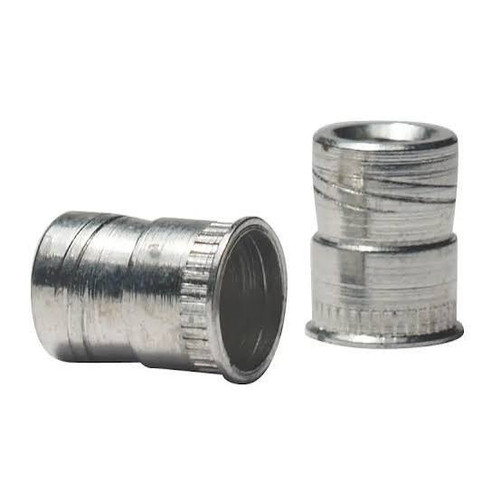
8-32 Steel Thread-Sert (.093+ Grip)
SKU: TSS832
$0.580each -
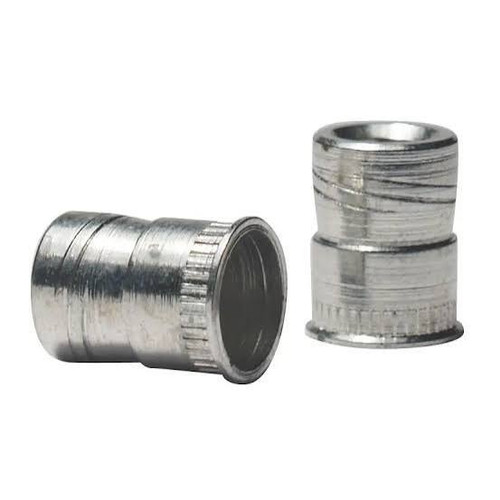
10-24 Steel Thread-Sert (.093+ Grip)
SKU: TSS1024
$0.690each -
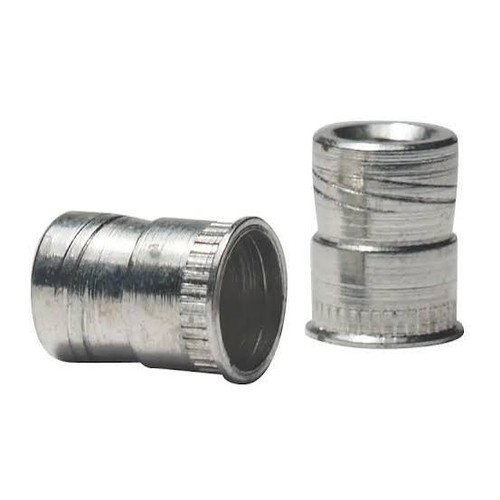
10-32 Steel Thread-Sert (.093+ Grip)
SKU: TSS1032
$0.690each -
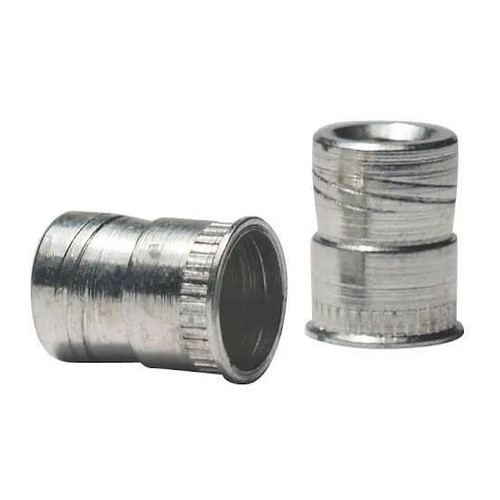
1/4-20 Steel Thread-Sert (.093+ Grip)
SKU: TSS1420
$0.910each -
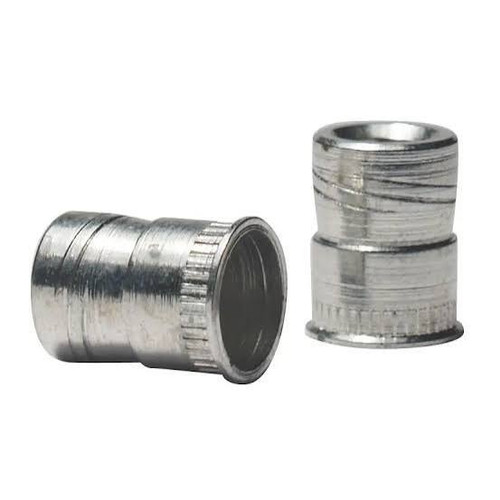
5/16-18 Steel Thread-Sert (.093+ Grip)
SKU: TSS51618
$0.600each -
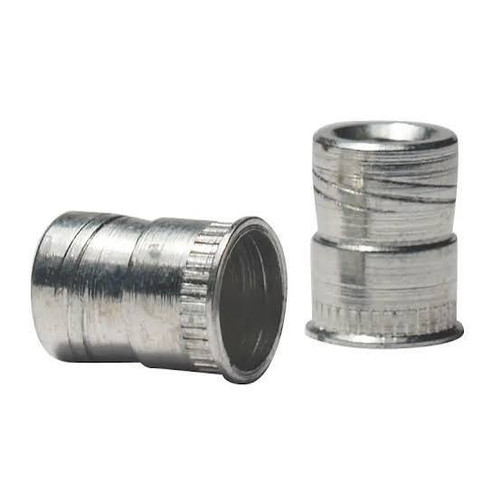
3/8-16 Steel Thread-Sert (.093+ Grip)
SKU: TSS3816
$1.790each
Specifications
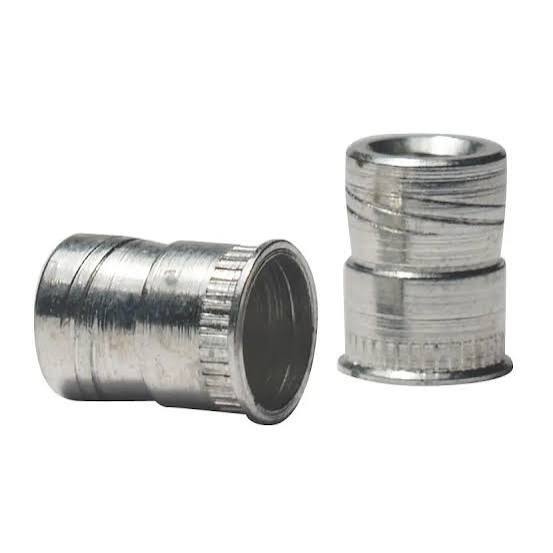
- Type: two-piece swaging rivet nut (sleeve + threaded base), small flange, open end
- Material: steel, zinc plated
- Threads: Unified inch – 6-32, 8-32, 10-24, 10-32, 1/4-20, 5/16-18, 3/8-16
- Material thickness: .094" minimum, no maximum – use the larger hole size for material over .156"
- Hole: drilled or punched; no special preparation
How to Choose
- Thread size: match the bolt or screw you will use.
- Hole size: measure the material. From .094" to .156" use the smaller hole; over .156" use the larger hole. Hole and drill sizes for every thread are on the Data Sheet (PDF).
- Material: steel gives higher strength and torque-out resistance – the best match for steel parts. In aluminum parts, use aluminum Thread-Serts® to avoid galvanic corrosion.
- Thin sheet? For material under .094", use ribbed rivet nuts instead.
How to Install
- Drill or punch the hole to the size on the Data Sheet (PDF) and deburr it.
- Thread the insert onto the mandrel of a rivet nut tool until the flange sits against the nosepiece.
- Push it into the hole until the flange is flat on the work.
- Operate the tool. The base is pulled up into the sleeve and swages it tight against the hole.
- Unscrew the mandrel and attach your part with a bolt or screw of the same thread.
Use the right mandrel and nosepiece for each thread size. See our rivet guns and rivet nut tools.
Common Uses
- Thick steel plate, tube and structural parts
- Blind holes where the back of the part cannot be reached
- Truck bodies, trailers and RVs
- Agricultural and construction equipment
- Electrical enclosures, panels and racks
- Machine guards and HVAC equipment
- Rigid plastic and fiberglass
FAQ
What is a Thread-Sert®?
A two-piece rivet nut: a threaded base inside a sleeve. When set, the base is pulled up into the sleeve and swages it 360° against the hole, giving high resistance to spin-out with very little back-side protrusion.
How thick can the material be?
Any thickness from .094" (3/32") up – there is no maximum grip, so they also work in thick plate and blind holes.
What size hole do I drill?
It depends on thread size and material thickness. For example, a 1/4-20 uses a 25/64" drill and a 3/8-16 uses a 9/16" drill in material from .094" to .156", or 37/64" in thicker material. Every size is on the Data Sheet (PDF).
What tool do I need?
Any manual or pneumatic rivet nut tool with the mandrel and nosepiece for the thread size.
Steel or aluminum?
Steel for higher strength and torque in steel parts; aluminum for aluminum parts and lighter-duty work where weight and corrosion resistance matter.
Related: Aluminum Thread-Serts® | Rivet Nuts | Rivet Guns & Tools | Blind Rivets
Free shipping on orders over $100, and orders placed before noon EST ship the same day. Purchase orders are accepted from government agencies, schools, hospitals, municipalities and companies with established credit with The Nutty Company, Inc.