




How to Choose the Right Nut
- Thread: match the bolt's diameter and threads per inch exactly, coarse (UNC) or fine (UNF).
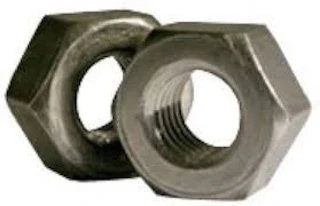
- Strength: use a nut of the same grade as the bolt or higher. Grade 8 nuts go with Grade 8 bolts; A194 2H heavy hex nuts go with B7 studs and threaded rod.
- Locking: where vibration is a concern, use a nylon insert, Stover, serrated flange or K-Lock nut, or lock a standard nut with a jam nut.
- Finish: zinc plating resists rust indoors and in dry locations. Outdoors, near salt water or in wet locations, choose hot-dip galvanized or stainless steel nuts.
Nuts in Other Materials
Stainless Steel Nuts | Galvanized Nuts | Metric Nuts | Stainless Steel Metric Nuts | Brass Hex Nuts | Silicon Bronze Hex Nuts | Aluminum Hex Nuts | Nylon Hex Nuts | Chrome Hex & Acorn Nuts | Rivet Nuts | Eye Nuts | Nut Assortments
Nut Data Sheets
- Finished Hex Nuts Data Sheet (PDF)
- Heavy Hex Nuts Data Sheet (PDF)
- Nylon Insert Lock Nuts Data Sheet (PDF)
- Thin (Jam) Nylon Insert Lock Nuts Data Sheet (PDF)
- Grade 8 Stover Lock Nuts Data Sheet (PDF)
- Grade 8 Flange Stover Lock Nuts Data Sheet (PDF)
- Serrated Flange Lock Nuts Data Sheet (PDF)
- ACME Hex Nuts Data Sheet (PDF)
More specifications are on our Fastener Technical Data page.
FAQ
What grade nut should I use with my bolt?
Match the nut grade to the bolt grade or higher: Grade 2 nuts with Grade 2 bolts, Grade 5 nuts with Grade 5 bolts and Grade 8 nuts with Grade 8 bolts. A nut weaker than the bolt can strip before the bolt reaches its full clamping load. For B7 studs and high-temperature or high-pressure service, use A194 2H heavy hex nuts.
How can I tell Grade 2, Grade 5 and Grade 8 hex nuts apart?
Grade 2 hex nuts have no grade marking. Grade 5 hex nuts are marked with 3 dots or lines on the face, and Grade 8 hex nuts with 6. Heavy hex nuts are stamped with their grade, such as 2H.
What is the difference between a hex nut and a heavy hex nut?
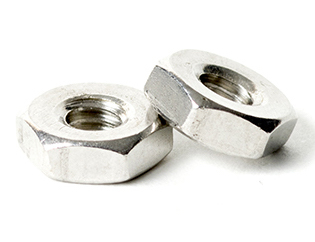
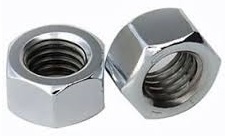
A heavy hex nut is thicker and wider across the flats than a standard (finished) hex nut of the same thread size. The larger bearing surface and extra thread engagement make heavy hex nuts the standard choice for structural bolts, anchor bolts and B7 studs.
Coarse (UNC) or fine (UNF) thread: which do I need?
The nut must match the bolt's thread. Coarse thread (for example 1/2-13) is the most common and is faster to assemble. Fine thread (for example 1/2-20) offers finer adjustment and better resistance to loosening, and is common in automotive and machinery work. Most of our hex, jam and Stover lock nuts are stocked in both.
Which lock nut is best for vibration?
Nylon insert lock nuts are reusable a few times and work up to about 250°F. All-metal Grade 8 Stover (prevailing torque) lock nuts handle higher temperatures and heavy-duty work. Serrated flange nuts bite into the mating surface, and K-Lock (Keps) nuts have a built-in tooth lock washer for quick assembly.
What is a jam nut used for?
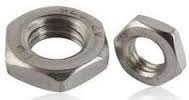
A jam nut is a thin hex nut. It is usually tightened against a full-height nut to lock it in place, or used where there is not room for a standard nut. Because of its lower height it should not carry the full load on its own.
Free shipping on orders over $100.