





Features
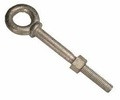
- Drop forged carbon steel – one continuous piece, closed eye
- Forged shoulder under the eye for angled loads (reduced WLL)
- Hot dip galvanized zinc coating for corrosion resistance
- Meets or exceeds ASME B30.26
- UNC coarse threads
- Supplied with a galvanized hex nut
Sizes & Working Load Limits
5:1 design factor. Angled ratings apply only when the shoulder is seated flat and tight.
- 1/4" (1/4-20) – 500 lb in-line / 150 lb at 45° / 125 lb at 90°
- 5/16" (5/16-18) – 800 lb in-line / 240 lb at 45° / 200 lb at 90°
- 3/8" (3/8-16) – 1,200 lb in-line / 360 lb at 45° / 300 lb at 90°
- 1/2" (1/2-13) – 2,200 lb in-line / 660 lb at 45° / 550 lb at 90°
- 5/8" (5/8-11) – 3,500 lb in-line / 1,050 lb at 45° / 875 lb at 90°
- 3/4" (3/4-10) – 5,200 lb in-line / 1,560 lb at 45° / 1,300 lb at 90°
- 7/8" (7/8-9) – 7,200 lb in-line / 2,160 lb at 45° / 1,800 lb at 90°
- 1" (1-8) – 10,000 lb in-line / 3,000 lb at 45° / 2,500 lb at 90°
Contact us for sizes not listed, including 1-1/4" and 1-1/2".
Angular Loading
- 0° (in-line): 100% of the rated WLL
- 45°: 30% of the rated WLL
- 90°: 25% of the rated WLL
- Pull in the plane of the eye. Never load across (sideways to) the plane of the eye, and never use angles over 90°.
Common Uses
- Lifting and rigging points, including angled lifts
- Docks, piers, boat lifts and marine rigging
- Through-bolted anchor points in wood or steel
- Guy wires, cable runs and tie-downs
How to Choose
- Diameter: pick the size whose working load limit, at your pull angle, is above your heaviest load.
- Shank length: it must pass through the material with room for a washer and the nut, plus a couple of threads past the nut.
- Straight pull only? A plain forged eye bolt also works.
Installation & Safety
- Seat the shoulder flat and tight against the surface, then tighten the supplied nut with full thread engagement. Use washers or shims so the shoulder bears fully.
- If the shoulder is not in full contact, use the eye bolt for in-line loads only.
- Inspect before each use: do not use an eye bolt that is bent, elongated, worn or has damaged threads.
- Never exceed the working load limit, never shock load, and never weld on an eye bolt.
FAQ
What is the difference between a shouldered and a plain eye bolt?
A shouldered eye bolt has a forged shoulder under the eye. When the shoulder is seated flat and tight against the surface, it can take angled loads at a reduced working load limit. A plain (regular nut) eye bolt is for vertical, in-line loads only.
How much do I reduce the working load limit for an angled pull?
At 45° use 30% of the in-line rating, and at 90° use 25%. Always pull in the plane of the eye, and never use angles over 90°.
Do the eye bolts come with a nut?
Yes. Every galvanized shouldered eye bolt is supplied with a galvanized hex nut.
What does working load limit (WLL) mean?
WLL is the maximum load an eye bolt should carry in service. Our galvanized shouldered eye bolts are rated with a 5:1 design factor, so the minimum breaking strength is about five times the in-line WLL.
Free shipping on orders over $100, and orders placed before noon EST ship the same day. Purchase orders are accepted from government agencies, schools, hospitals, municipalities and companies with established credit with The Nutty Company, Inc.