
What Is an Eye Bolt? (Complete Guide for Buyers & Builders)
Mar 2nd 2026
Eye bolts are fasteners that are used in many projects. People use them in construction, rigging, lifting heavy things, and DIY projects at home. These simple but strong tools help hold, secure, and lift loads safely. Whether you're building or fixing something, eye bolts can help you do the job right.
What Is an Eye Bolt?
An eye bolt is a type of fastener with a special design. It has threads like a regular bolt on one end. The other end has a looped head that looks like an eye. This "eye" or loop is where you attach ropes, cables, chains, or hooks.
Key Components of an Eye Bolt
Eye/Loop: The eye is the circular loop at the top. Some eyes are completely closed. Others have a small gap. Closed eyes are stronger and safer for lifting. Open eyes work for lighter jobs where nothing will slip out.
Shank/Body: The shank is the threaded part that screws into materials. It has a specific length and diameter. Longer shanks go deeper into materials. Thicker shanks are stronger and hold more weight.
Shoulder: Some eye bolts have a shoulder. This is a wider, flat area where the eye meets the shank. The shoulder spreads out the load and makes the eye bolt stronger. Shouldered eye bolts can handle loads pulling from different angles.
Material Options: Steel is a strong and common material for eye bolts. Stainless steel resists rust and can be used outdoors. Galvanized steel has a protective coating. Each material has different strengths and uses.
Types of Eye Bolts (with Use Cases)
Shouldered Eye Bolts: These have a shoulder that provides extra strength. Use shouldered eye bolts when loads might pull at angles. They're safer for lifting because the shoulder distributes weight.
Non-Shouldered Eye Bolts: These are used for straight, in-line loads. Never use them for angular pulls. They work well for hanging things straight down.
Forged Eye Bolts: Use forged eye bolts for heavy-duty lifting applications. They can handle very heavy loads safely. Industrial settings use these often.
Bent Eye Bolts: The eye on these is bent at an angle to the shank. Use bent eye bolts for non-critical load applications only. They're good for routing cables or light hanging but shouldn't be used for lifting heavy things.
Machinery Eye Bolts: These are designed specifically for lifting equipment and motors. They have special ratings for machinery weight. Use machinery eye bolts when moving heavy equipment. They meet strict safety standards.
Swivel Eye Bolts: These allow 360-degree rotation of the eye. The eye can spin around freely. Use swivel eye bolts when loads need to move or rotate. They prevent twisting of cables and ropes.
Lag Eye Bolts / Screw Eye Bolts: These have wood screw threads instead of machine threads. Use them for wood applications like posts, beams, and decks. They screw directly into wood without needing a nut.
Ring Bolts / Eye Bolt with Ring: These have a ring that moves through the eye. The ring can slide and pivot. Use ring bolts for dynamic load scenarios where movement happens. They're popular in marine applications.
Common Materials & Finishes
Stainless Steel (304/316): Stainless steel resists rust really well. Type 304 works for most outdoor jobs. Type 316 works well in marine and saltwater environments.
Hot-Dip Galvanized: This process coats steel with a thick layer of zinc. Hot-dip galvanized eye bolts work great for construction and outdoor projects. These work well in harsh weather conditions.
Zinc-Plated Steel: A thin zinc coating covers these eye bolts. Zinc-plated steel works for general indoor use. The coating provides some rust protection. These cost less than stainless or galvanized options.
Carbon Steel: Use carbon steel eye bolts for heavy-duty lifting applications indoors. They're not good outdoors because they rust easily.
Brass / Silicon Bronze: These special materials resist corrosion in unique ways. Use brass or bronze eye bolts in chemical environments or special marine applications. They cost more but work in tough conditions.
Eye Bolt Sizes & How to Choose the Right Size
Thread Diameter & Pitch: The diameter is how thick the threaded part is. Common sizes include 1/4", 3/8", 1/2", and larger. The pitch is how close together the threads are. Make sure the threads match your application.
Shank Length: This is how long the threaded part is. The shank needs to be long enough to go through your material. Measure carefully before buying.
Inside Eye Diameter: The inside diameter of the loop matters too. Make sure your rope, cable, or chain fits through easily.
Working Load Limit: Every eye bolt has a maximum safe weight. This is called the working load limit. Never exceed this weight and always check the rating before starting your project.
Grade Markings: Some eye bolts have markings that show their strength grade. Higher grades hold more weight. Look for these markings when buying.
Best Practice: Always consult load charts from the manufacturer. The Nutty Company provides detailed load charts for all eye bolts. These charts tell you exactly how much weight each size can hold safely.
How Eye Bolts Are Used
Lifting & Hoisting Loads: Eye bolts create attachment points for lifting heavy objects. Cranes and hoists connect to eye bolts. Factories use them to move equipment and materials. Always use shouldered eye bolts for lifting.
Anchoring Cables, Wires, and Ropes: Eye bolts secure cables and wires in place. Electricians use them to route wiring. Contractors use them to anchor guy wires. The eye provides a strong attachment point.
Construction/Structural Support: Builders use eye bolts as temporary or permanent anchor points. They help secure scaffolding and safety lines. Construction sites use them for many rigging applications.
Marine & Offshore Applications: Boats and docks use eye bolts extensively. They secure ropes, anchor points, and equipment. Stainless steel eye bolts resist saltwater corrosion. Marinas rely on them daily.
Industrial Machinery Lifting Points: Factories install eye bolts on equipment for moving and maintenance. When machines need repair, eye bolts provide safe lifting points. Machinery eye bolts are rated for this specific use.
DIY, Overhead Storage, Home Fixtures: Homeowners use eye bolts for many projects. Hanging storage in garages, creating tie-down points for tarps, and installing swings or hammocks are a few great use cases.
How to Install an Eye Bolt (Step-by-Step Guide)
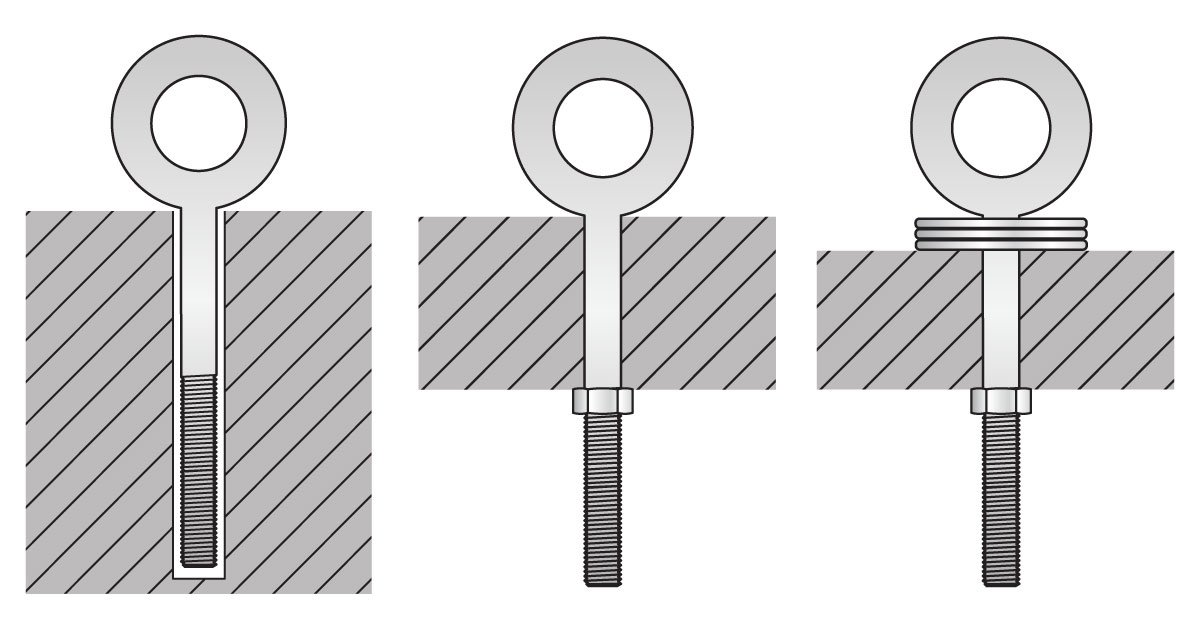
Installing in Metal (Lifting/Rigging)
Step 1: Prepare the Hole Drill or tap a hole with the correct thread size. Make sure the hole is clean and free of debris. The threads should be clean and undamaged.
Step 2: Ensure Proper Shoulder Seating If using a shouldered eye bolt, the shoulder must sit flat against the surface. A shoulder that doesn't sit properly reduces strength dramatically.
Step 3: Use Washers/Nuts Where Required Some installations need washers under the eye bolt. Others need a nut on the back side. Always follow the manufacturer's instructions.
Step 4: Avoid Side Loading Only pull straight in line with the shank on non-shouldered eye bolts. Side loading can cause failure. Use shouldered eye bolts if you need to pull at angles.
Step 5: Follow Torque Guidelines Tighten the eye bolt to the correct torque. Too loose is dangerous. Too tight can damage threads. Use a torque wrench for important applications.
Installing in Wood (Lag Eye Bolt / Screw Eye)
Step 1: Pre-drill Pilot Hole Always drill a pilot hole first. The hole should be slightly smaller than the eye bolt shank. This prevents the wood from splitting. Measure and mark carefully.
Step 2: Insert Using Wrench/Handle Put a rod or screwdriver through the eye. Use this as a handle to screw in the eye bolt. Turn clockwise until tight. Don't force it or you might strip the threads.
Step 3: Check Alignment and Depth Make sure the eye bolt goes in straight. Check that it's deep enough for full thread engagement. The eye should be oriented correctly for your application.
Safety Emphasis: Always follow safety guidelines when installing eye bolts. Wear safety glasses and gloves and check your work before applying loads.
How to Select the Right Eye Bolt for Your Application
Load Requirements: Calculate the maximum weight you'll be lifting or securing. Add a safety factor and choose an eye bolt rated well above your needs. Never use an eye bolt at its maximum rating.
Environmental Exposure: Think about where the eye bolt will be used. Indoors or outdoors? Near water or chemicals? Humid or dry? Match the material to the environment.
Material & Finish: Based on your environment, pick the right material. Stainless for marine use, galvanized for outdoor construction and zinc-plated for indoor projects.
Type and Shoulder: Will loads pull at angles? You need shouldered eye bolts. Straight pulls only? Non-shouldered might work. Lifting requires shouldered types for safety.
Thread Size Compatibility: Make sure the threads match your application. Check existing holes or mounting points. Order the right diameter and pitch.
Static vs Dynamic Load: Static loads don't move much. Dynamic loads move, swing, or change. Dynamic loads need stronger eye bolts. Consider using swivel or ring types for moving loads.
Frequently Asked Questions
Can eye bolts be used for overhead lifting?
Yes, but only shouldered eye bolts should be used for overhead lifting. The shoulder provides the strength needed for lifting applications. Never use non-shouldered eye bolts for overhead lifting. Always check the working load limit and follow safety guidelines.
What material is best for marine environments?
Stainless steel is best for marine environments. Type 316 stainless steel offers the best corrosion resistance in saltwater. It won't rust like regular steel. Hot-dip galvanized steel also works well near water but not directly in saltwater.
How do I know if I need a shouldered eye bolt?
You need a shouldered eye bolt if loads might pull at any angle other than straight in line with the shank. All lifting applications require shouldered eye bolts. If you're unsure, choose shouldered eye bolts because they're always safer.
What size eye bolt do I need for lifting equipment?
The size depends on the equipment weight and lifting angle. Check the manufacturer's load charts for your specific eye bolt. Machinery eye bolts are designed specifically for lifting equipment. Always add a safety factor and never exceed the working load limit.
Shop High-Quality Eye Bolts at Nutty.com
The Nutty Company offers a complete range of eye bolts for every application. We stock eye bolts in multiple materials including stainless steel, galvanized steel, and zinc-plated steel. Our selection includes shouldered, non-shouldered, forged, swivel, and lag eye bolts.