
What is a Fastener? A Complete Guide to Fasteners
Mar 3rd 2026
Fasteners are essential hardware used in construction, manufacturing, automotive work, woodworking, and everyday DIY projects, while welding provides another method of joining material. These simple but important pieces hold things together safely and securely. Without fasteners, buildings would fall apart, machines wouldn't work, and furniture would collapse.
Understanding what is a fastener and how they work helps you choose the right ones for your projects. The Nutty Company offers one of the widest selections of fasteners online. We stock everything from tiny screws to heavy-duty bolts. This guide covers the main types of fasteners and their uses. You'll learn when to use bolts, screws, nuts, washers, rivets, anchors, and more.
What Are Fasteners?
Fasteners are a type of hardware that joins or secures two or more objects together. They connect wood to wood, metal to metal, or different materials to each other.
The two common types of fasteners are temporary and permanent. Temporary fasteners such as nuts and bolts, as well as screws, can be removed and used again. Permanent fasteners like rivets create lasting connections and can't be reused.
The type of fastener you choose is important. You’ll want to consider the load, materials, and local environment. The right choice can make all the difference in your projects to ensure they are safe and durable!
Major Categories of Fasteners
Different types of fasteners fall into several main categories, often based on their uses with common materials. Each works differently and serves specific purposes.
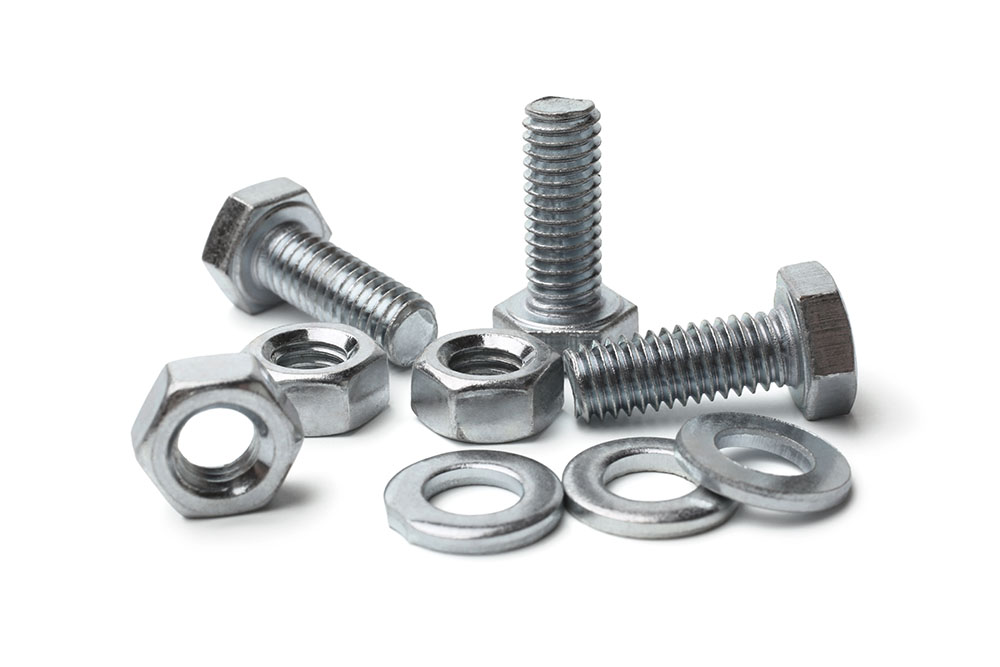
Bolts are externally threaded fasteners that work with nuts. They create strong, removable connections. Nuts contain a threaded hole that fits their matching bolt. They screw on to the bolts to fasten connections. Screws have threads and pointed tips and cut their own path into materials.
Washers are thin disks with a hole in the middle that help distribute loads and help prevent damage to the object being fastened, though alternatives like adhesives can also be used in some applications. Rivets create permanent connections by deforming metal. Anchors attach things to concrete, brick, or drywall. Pins align parts and create pivot points in machinery. Clips and Retaining Rings secure items on shafts and rods. Nails are traditional fasteners driven with hammers for wood.
Bolts (Types & Uses)
Bolts are threaded fasteners that work with nuts. Many different types of fasteners exist in this category.
Hex bolts have six-sided heads and are the most commonly used bolts. You'll use them mostly for general construction and machinery. Carriage bolts have rounded heads and square necks that grip wood. You can use them for wood-to-wood connections like decks.
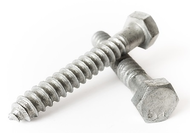
Lag bolts are heavy-duty wood screws with hex heads. You'll use them for heavy items that are attached to wood. Eye bolts have loops instead of heads. These are used for lifting and anchoring.
U-Bolts help secure pipes and tubes, and you should consider using stainless steel fasteners for added durability. They're most commonly used in plumbing and automotive work. Flange bolts have built-in washers and are used in automotive applications.
Nuts (Types & Uses)
Nuts connect to corresponding threaded bolts and threaded inserts for a tight fit. Hex nuts are the most common and work with all standard bolts. Lock nuts resist loosening from vibration and are mostly used on vehicles and machinery. Wing nuts have wings for hand tightening without tools. Cap nuts cover bolt ends for a finished look. Flange nuts have built-in washers and resist loosening for a more secure connection. Coupling nuts connect two bolts together.
Screws (Types & Uses)
Screws are versatile with many specialized types. They come with different drive types including Phillips, slotted, hex, and Torx. You'll want to choose the best type of screw based on the project you're working on.
Wood screws have coarse threads for wood projects. Sheet metal screws can cut through thin metal for HVAC and roofing applications. Machine screws work in pre-threaded holes or with nuts.
Self-tapping screws cut their own threads in metal and plastic, making them a versatile device for various applications . Self-drilling screws have drill-bit points that make their own holes. Deck screws resist corrosion for outdoor wood decks. Drywall screws secure drywall to studs quickly and easily. Lag screws are heavy-duty for structural wood connections.
Washers (Types & Uses)
Washers improve connections and serve several purposes. Flat washers distribute loads over larger areas to prevent damage. Split lock washers dig into surfaces to prevent loosening from vibration. Fender washers are extra large for soft materials. Sealing washers have rubber coatings for watertight seals. Belleville washers are cone-shaped springs that maintain tension. Make sure you don't skip using washers when they're recommended!
Anchors (Types & Uses)
Anchors let you fasten things to masonry, concrete, and drywall, playing a critical role in joining components securely. Wedge anchors expand in concrete for very strong permanent connections. Expansion anchors use sleeves that expand against hole walls. Sleeve anchors work in concrete, brick, and block. Toggle bolts have wings that open behind drywall for heavy items. Tapcon/Concrete screws thread directly into concrete. Plastic wall anchors work in drywall for light loads. Always match the anchor to your base material and load requirements.
Rivets & Permanent Fasteners
Rivets create permanent joints in metal work. Blind rivets (Pop Rivets) install from one side. Use them in automotive and metalwork. Solid rivets require access to both sides and are extremely strong. Structural rivets are used for heavy-duty steel construction. Drive rivets can be installed by hammering for quick, permanent connections. Once installed, rivets can't be easily removed and are not able to be reused.
Pins, Clips & Retaining Fasteners
These secure items and create pivot points in machinery. Cotter pins split and bend to lock nuts. Clevis pins create pivot connections. Dowel pins align parts precisely. Roll pins compress when installed to secure components. Retaining rings snap into grooves to prevent parts from sliding. Hairpin clips slide onto pins for quick securing.
Nails (Traditional Fasteners)
Nails install quickly with hammers or nail guns. Common nails are used for general construction and framing. Finish nails have small heads for trim and molding. Brad nails are very thin for delicate work. Roofing nails have large heads for securing shingles. Framing nails are thick and strong for structural work.
Common Materials & Finishes
Material, such as different alloys, affects strength, durability, and corrosion resistance. Stainless steel resists rust and can be used outdoors and near water. Zinc-plated steel has moderate corrosion resistance and is best for indoor use. Hot-dip galvanized finishes have thick zinc coating for excellent outdoor protection.
Carbon steel grades (2, 5, 8) indicate strength. Higher grades hold more weight. Brass and bronze resist corrosion and look attractive. Nylon/plastic don't conduct electricity and resist chemicals. Black oxide has a dark finish with moderate rust resistance. Always match the materials to your environment and needs.
Choosing the Right Fastener (Buyer's Guide)
Consider these factors when selecting fasteners:
Load Requirements: Choose fasteners rated above your needs.
Material Being Fastened: Different materials need different fasteners.
Indoor vs Outdoor: Outdoor needs corrosion resistance.
Thread Type/Size: Match threads to your application.
Head Style: Choose based on tools and appearance.
Permanent vs Removable: Decide if you'll take it apart later.
Taking time to choose correctly prevents failures.
Common Fastener Applications
Depending on your project and the industry you work in, mechanical properties will help determine what type of fasteners should be used. Construction uses structural bolts, concrete anchors, and framing nails. Automotive requires grade 8 bolts and lock nuts. Electrical and HVAC uses self-tapping screws and corrosion-resistant fasteners. Woodworking relies on wood screws and finish nails. Marine uses need to use stainless steel for saltwater resistance. DIY home repair projects will use various anchors, screws, and nails depending on the project. Industrial machinery needs precision fasteners and high-strength bolts.
FAQs on Fastener Types
What is the strongest type of fastener?
Grade 8 bolts are the strongest of all the common fasteners. They handle extremely heavy loads. Structural rivets are very strong for permanent attachments as well. You should always verify load ratings and select fasteners that are rated well in excess of your requirements for safety.
Are stainless steel fasteners best for outdoor use?
Stainless steel and hot-dip galvanized fasteners work best outdoors. They resist rust from rain and harsh weather. For marine environments, use type 316 stainless steel. Avoid plain steel outdoors because it rusts quickly.
What's the difference between a bolt and a screw?
Bolts work with nuts and have uniform threads. Screws thread into materials directly and often have pointed ends. Bolts create removable connections while screws can be removable or semi-permanent. Both are important types of fasteners.
Which fasteners are best for concrete?
Wedge anchors, expansion anchors, and Tapcon concrete screws are the right choice to use in concrete. Wedge anchors for heavy loads. Concrete screws provide a faster solution for light to medium loads. Always drill proper-sized holes for concrete fasteners.
What are Grade 5 and Grade 8 fasteners?
Grade 5 and Grade 8 are the strength rating of bolts. Type 5 is a general purpose medium strength grade. Grade 8 has high strength for heavy loads. Higher grades cost more but hold more weight. Check the bolt head for grade markings.
Shop All Types of Fasteners at Nutty.com
The Nutty Company offers one of the widest inventories of fasteners online. We have over thousands of fasteners available in a variety of materials and plating options. Our range includes stainless steel, galvanized and zinc-plated products.
Whether you need bulk quantities for construction or small packs for a home repair project, we have you covered. We also carry specialty fasteners for unique applications too.
Browse our complete fastener selection at Nutty.com. Find exactly what you need for your construction, manufacturing, automotive, or DIY project. Get quality fasteners you can trust from The Nutty Company!