
Fastener Coatings & Finishes Explained: Zinc, Black Oxide, Galvanized & More
Jan 25th 2026
Fasteners are often exposed to moisture, chemicals, friction, and fluctuating temperatures, which can significantly affect how long they last and how reliably they perform. Without proper surface treatment, even high-quality fasteners can degrade quickly, leading to rust, reduced strength, or premature failure. That is why surface treatments matter for performance, corrosion resistance, and aesthetic consistency across applications.
This aspect is where fastener coatings and fastener finishes come into play. These treatments help extend service life, improve durability in demanding environments, and provide visual uniformity where appearance matters. From industrial construction to everyday assemblies, coatings influence how fasteners behave once installed.
At Nutty, this understanding comes from years of working with fasteners across real-world applications. Customers are guided toward coatings and finishes that balance corrosion protection, durability, and performance in specific environments.
What Are Fastener Coatings & Finishes?
Fastener coatings and fastener finishes refer to surface treatments applied to fasteners to improve durability, corrosion resistance, and overall performance.
While the terms are often used interchangeably, they serve slightly different purposes.
Fastener coatings are typically applied to create a protective barrier that improves corrosion resistance, wear resistance, or chemical resistance. Fastener finishes, on the other hand, focus more on surface appearance, lubricity, or preparation for additional treatments.
|
Aspect |
Coatings |
Finishes |
|
Primary Purpose |
Protection and performance |
Appearance and surface prep |
|
Typical Thickness |
Thick protective layer |
Thinner surface treatment |
|
Performance Impact |
High |
Moderate |
These treatments help fasteners withstand moisture, friction, and harsh environments, extending service life and maintaining structural integrity.
Industry experience across construction, manufacturing, and hardware supply consistently shows that selecting the right coating or finish is critical to long-term reliability, not just short-term cost savings.
Drawing from years of supplying fasteners across construction, manufacturing, and hardware applications, our team at Nutty regularly sees how the right coating choice directly impacts service life, safety, and long-term performance.
Why Fastener Coatings Matter
Fasteners may be small components, but their failure can compromise entire assemblies. Applying the right coating improves performance in several critical ways:
- Improves corrosion resistance and slows rust formation
- Enhances durability in harsh environments such as outdoor or marine use
- Increases wear resistance during installation and service
- Helps maintain structural integrity under load
- Provides uniform appearance for decorative purposes
Without sufficient corrosion protection, even high-strength steel fasteners can deteriorate quickly.
As coatings expert Mark Schario notes, "Coatings help with fastener performance by improving durability and lifespan; the importance of choosing the proper coating can often be overlooked."
Proper coatings help deliver excellent corrosion resistance, extend durability, and reduce maintenance or replacement needs across different industries.
Common Fastener Coating Types Explained
1. Zinc Coating
Zinc coatings are among the most common finishes used on steel fasteners because they balance performance with cost-effective protection. Zinc provides sacrificial protection, meaning it corrodes before the metal underneath, helping delay rust formation.
Zinc can be applied through electroplating or hot-dipped processes.
Hot-dip galvanizing immerses fasteners in molten zinc, producing a thicker coating that delivers maximum corrosion protection for outdoor applications. Electroplated zinc creates a thinner, more uniform finish suited for controlled environments.
Zinc finishes are widely used on screws, bolts, and small fasteners where reliable protection and consistent installation are required.
Drawing from materials science studies, our experts at Nutty recommend electroplated zinc for indoor use. Its thin, uniform layer suits controlled environments and small fasteners. Opt for hot-dip galvanized outdoors, where it applies about 10 times more zinc for superior, self-healing protection.
2. Black Oxide
Black oxide is a conversion coating that chemically alters the surface of steel fasteners rather than adding material. Because it does not significantly increase thickness, it preserves dimensional accuracy and thread fit.
This finish offers minimal corrosion resistance on its own but provides a clean, uniform appearance with excellent lubricity, especially when paired with an oil dip. Its primary advantage is aesthetic consistency rather than long-term exposure protection.
Black oxide is best suited for interior fasteners, tooling components, and applications where appearance, fit, and low glare matter more than environmental resistance.
3. Galvanized Finish
Galvanized fasteners are designed for long-term exposure in harsh environments.
Hot-dipped galvanizing produces a thick zinc layer that offers excellent durability and extended corrosion protection.
Mechanical plating applies zinc powder using glass beads and an electrically charged process, reducing the risk of hydrogen embrittlement.
These coatings are commonly used for structural projects, outdoor installations, and treated lumber applications where corrosion-resistant performance is essential.
Hot-dip galvanized fasteners meet US standard ASTM A153/A153M, requiring 1.0–2.0 oz/ft² zinc minimum (e.g., Class C fasteners: 1.25 oz/ft² average) for durable, adherent protection in harsh conditions.
4 Other Notable Coatings & Finishes
• Cadmium Plating
Offers high corrosion resistance and reliable lubricity, which is why it has long been preferred in aerospace and military applications. Due to environmental and safety concerns, its use is now highly regulated and limited to specific critical use cases.
• Phosphate Coatings
Commonly used as a base layer for painting or additional finishes. Phosphate coatings improve paint adhesion and provide moderate wear resistance, but they are not intended as standalone corrosion protection.
• Anodizing (for Aluminum Fasteners)
Anodizing adds surface thickness and protection to aluminum fasteners. It improves corrosion resistance, increases hardness, and allows for color options, along with good UV resistance for exposed components.
• Teflon / PTFE / Dry Film Lubricants
Designed for low-friction applications, these coatings reduce galling and wear. They are widely used in food processing and chemical industries, where clean operation and consistent performance are required.
How Coating Selection Impacts Fastener Performance
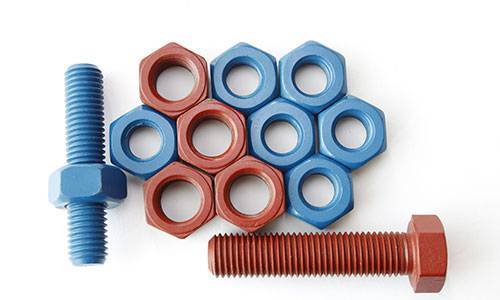
Here's what others don't tell you: Selecting the right coating directly influences fastener longevity and reliability.
Environmental exposure, load conditions, and compatibility with other materials all play a role. For example, marine applications demand coatings with strong resistance to saltwater corrosion, while indoor assemblies may prioritize appearance or lubrication.
Different substrate materials, such as stainless steel, steel, or brass, respond differently to coatings. Coating thickness can affect torque values, while poor surface preparation may reduce adhesion and durability.
Matching the coating type to the application helps ensure fasteners maintain consistent performance without premature degradation.
In bridge construction, industry researcher Dr. Gregory Zhang's Zinc Coating Life Predictor confirms that hot-dip galvanized structural steel provides 72–73 years of first maintenance (when 5% rust appears) in corrosive atmospheres.
Industry Standards & Compliance
Fastener coatings must meet established standards to ensure safety, consistency, and regulatory compliance. Common requirements include ASTM and ISO specifications governing plating, electroplating, and corrosion testing performance. Environmental regulations such as RoHS and REACH also limit hazardous substances used in surface treatments.
Industry standards like ASTM B633 (zinc coatings) and ISO specifications for corrosion testing help define acceptable performance thresholds.
At Nutty, fasteners are sourced and finished to align with applicable standards, ensuring reliability across industrial, commercial, and construction applications.
How to Choose the Right Fastener Coating (Step-by-Step)
Choosing the right coating for fasteners starts with understanding real operating conditions rather than defaulting to the most common option.
- Define the operating environment
Start by identifying where the fastener will be used. Exposure to moisture, salt air, chemicals, or temperature swings increases the need for higher corrosion resistance.
Indoor or climate-controlled environments may allow lighter coatings without sacrificing performance. - Determine load and mechanical needs
Consider whether the fastener will experience high loads, vibration, or repeated tightening.
Certain plating processes preserve structural integrity, while others may increase the risk of hydrogen embrittlement in high-strength steel applications. - Select material first
The base material affects coating compatibility. Stainless steel, carbon steel, aluminum, and brass each respond differently to surface treatments.
Material choice influences adhesion, durability, and overall performance. - Match the best coating or finish
Once the material and environment are clear, choose a coating that aligns with the application.
Options like zinc plating, black oxide, or hot-dipped galvanizing offer different balances of protection, appearance, and service life. - Confirm compliance and specifications
Before finalizing, verify ASTM, ISO, and regulatory requirements.
Compliance ensures the coating meets industry expectations for safety, durability, and long-term reliability.
Conclusion & Final Thoughts
Selecting the right combination of fastener coatings and fastener finishes directly affects durability, appearance, and long-term performance.
The most effective choices balance corrosion protection, mechanical demands, and environmental exposure rather than relying on a one-size-fits-all solution. Understanding how coatings interact with different materials helps prevent premature failure and unnecessary maintenance.
At Nutty, coating selection focuses on practical performance and compliance, ensuring fasteners deliver reliable protection across industrial, commercial, and everyday applications.
FAQs
Can I paint over a coated fastener?
Yes, but it depends on the coating type. Finishes such as phosphate coatings are commonly used to improve paint adhesion. Smooth or plated surfaces may require additional surface preparation before painting.
Does coating affect torque specs?
Yes. Different coatings change surface friction, which can alter torque values during installation. Always consult manufacturer specifications when precise preload or clamping force is required.
Are all fastener coatings RoHS compliant?
No. RoHS compliance depends on the coating materials and the process used. Some finishes meet requirements by default, while others require controlled formulations or exemptions.
Which coating is best for outdoor furniture?
Outdoor furniture typically benefits from finishes with strong corrosion resistance, such as zinc coatings or hot-dipped galvanizing, which help protect fasteners from moisture and weather exposure.