
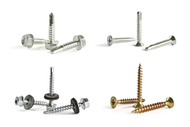
Self-Tapping vs. Self-Drilling Screws: Choosing the Right Fastener for Your Project
Oct 26th 2025
Your choice of fasteners can make or break any project. Whether you are a professional contractor working on a commercial build or a DIY enthusiast focusing on home improvement, knowledge about the difference between self-tapping vs self-drilling screws can ensure that you achieve fastening that is strong, durable, and resistant to corrosion. Although self-tapping and self-drilling are commonly confused and used interchangeably, the two are clearly different in definition and use.
What Are Self-Tapping Screws?
Self-tapping screws are a type of threaded fastener specifically designed to create their threads as they are driven into the material. Most conventional screws require pre-threaded holes, while self-tapping fasteners cut or form threads as they are driven into the substrate. There are primarily two types of self-tapping screws: thread-forming, which push the material aside and don’t remove any substrate and are perfect for softer materials such as plastics and very soft sheet metal, and thread-cutting that effectively work in metals and hardwood, cutting away the material to form the thread.
What Are Self-Drilling Screws?
Self-drilling screws take convenience a step further by combining a drill bit tip with a threaded fastener body. These screws, also known as Tek screws, can drill a pilot hole and create threads in one go, allowing fastening without requiring the pre-drilling process. The most significant advantage of self-drilling screws over self-tapping ones is reduced installation time. As this type of screw eliminates the need for pre-drilling, the installation process tightens significantly. This reduced labor time and fewer tools leaving easier accessibility for other accessories.
Key Differences Between Self-Tapping and Self-Drilling Screws
There are various key differences between self-tapping screws vs. self-drilling screws to help you select the best fastener that will deliver optimal results.
Self-tapping screws need a pilot hole to be pre-drilled before installation, especially in hard materials. In contrast, a self-drilling screw needs no pilot hole; instead, it drills its own hole as it progresses through a material.
Second, the tip of the screws is different. A self-tapping screw has a sharp-pointed tip that is designed to fit inside a pre-drilled hole and then form or cut threads. Self-drilling screws have a drill bit-like tip and, in most cases, flutes that remove materials as the screw advances. The screws are essentially a cross between a drill and a screw.
Thread type is another key difference between the two. Self-tapping screws can cut either the threads by displacing or cutting away material. On the other hand, self-drilling screws first drill through the material, then they engage the threads after the pilot hole is formed, ensuring that the threading process is more controlled.
Lastly, the material that each screw type works with is very different, with self-tapping screws compatible with soft materials such as wood, plastic, and thin sheet metals if piloted properly. In contrast, self-drilling screws are engineered to work with hard materials such as thick steel plates, metal roofing sheets, and steel connections since a drill would otherwise be needed.
When to Use Each Type
Soft materials such as wood, plastic, or thin sheet metal, when it's simple and easy to pre-drill, are more suitable for self-tapping screws. If the screw needs to be inserted into a precisely defined position, then it is better to use this type of fastener, for example, in the assembly of electronics or furniture since the self-tapping screw requires a pilot hole and the screw cannot deviate from the intended hole. Also, this type of fastening is suitable for cases where it is necessary to use screws of different sizes on one material. It is enough to drill a hole of the required diameter, and then the screw already creates a thread during installation.
Materials from which it is easy to drill a pilot hole, the place of installation is not close to the edge, and works with several types of materials. For metal-to-metal connection, we must give preference to self-tapping. Such self-tapping is more suitable for structural connections, for example, self-tapping fasteners in HVAC installation due to the tightness to the material and the thread created along the entire length. Here, the pilot hole is also relieved when working with harder materials, with a large number of screw sizes used in one material-steel, copper, brass. This is especially necessary when the work involves the material at the edges, the pilot hole will not allow the material to break or split.
Common Misconceptions
Several myths and misunderstandings surround self-tapping vs self-drilling screws, which can lead to improper fastener selection and installation problems.
One misconception is that self-tapping screws never require pilot holes. While these screws can technically tap their own threads, attempting to use them without pilot holes in harder materials often results in broken screws, stripped heads, or split material. Industry professionals at TheNutty Company consistently emphasize that pilot holes aren't optional, they're essential for proper installation in most materials except very soft plastics.
Another common myth suggests that self-drilling screws work equally well in all materials. In reality, these screws are optimized for metal and struggle in materials like wood, where the drill point may create an oversized hole that compromises thread engagement. The drill bit tip that makes them perfect for steel becomes a disadvantage in softer substrates.
Choosing the Right Screw for Your Project
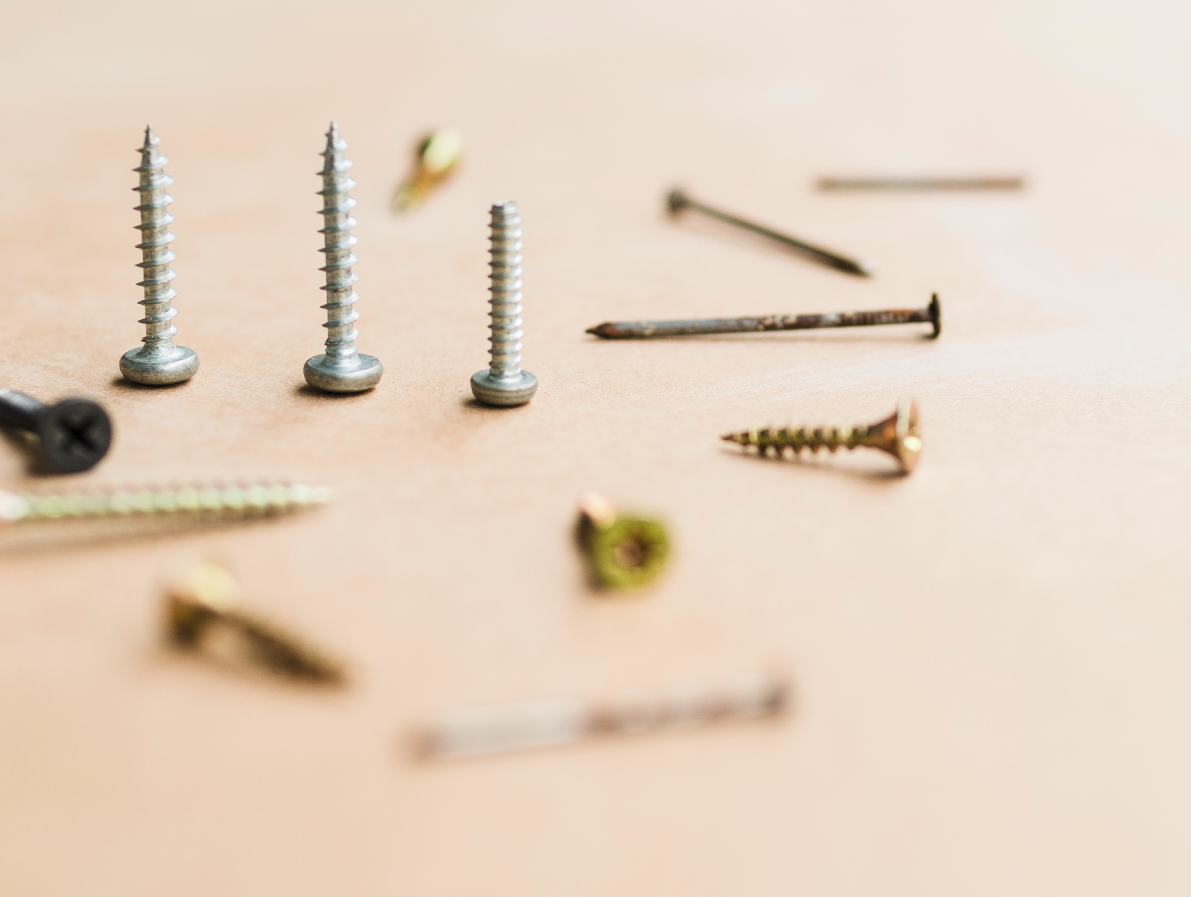
Selecting the right fastener requires careful consideration of multiple factors beyond simply choosing between self-tapping and self-drilling screws.
Material thickness plays a crucial role in screw selection. For materials under 1/8 inch thick, thread-forming self-tapping screws often provide excellent results. Materials between 1/8 and 1/4 inch thick work well with thread-cutting self-tapping screws or self-drilling screws with appropriate point styles. Thicker materials, particularly steel over 1/4 inch, typically demand self-drilling screws with robust drill points designed for heavy-gauge metal.
Environmental conditions significantly impact fastener performance and longevity. Outdoor applications exposed to moisture require corrosion-resistant coatings or stainless steel construction.
Load requirements determine the screw diameter, length, and thread pattern needed. Structural applications bearing significant weight or stress require larger diameter screws with coarser threads for maximum holding power. Lighter-duty applications can use smaller fasteners, potentially reducing material costs while maintaining adequate strength.
Conclusion
Knowing the differences between self-tapping and self-drilling allows you to make smart choices that save time, reduce costs, and guarantee the success of your projects. Self-tapping screws provide the versatility and accuracy required for critical applications in soft materials and applications that benefit from pilot holes. Self-drilling screws are ideal for metal-to-metal connections and large-scale projects, where eliminating the need to pre-drill holes results in considerable time savings.
Frequently Asked Questions
Can self-tapping screws be used without a pilot hole?
Self-tapping screws can be used without a pilot hole on the assumption that many soft materials can technically be threaded without a pilot hole. However, in hard materials like metal, dense wood, or other denser materials, this will damage the screw, split the material, strip the head, or cause other issues.
Are self-drilling screws suitable for wood?
Self-drilling screws are not suitable for use in wood. First and foremost, it's excessive because the drill bit creates a hole too big, and the threads slip on the wood fiber. Instead, a standard wood screw or a self-tapping screw that fits snugly in a pilot hole would work much better.
Which type of screw is faster to install?
Self-drilling screws are faster to install. This is because the process of drilling and turning is completed as one action, which is much faster than drilling a pilot hole and then turning the screw into place.
Can self-tapping screws be reused?
Self-tapping screws should not be reused. When the screws are taken out, the threads are seen to get ruined. Fitting into a ruined thread, or forth and back of a ruined thread only will lower the holding power. Especially not suited for being used again are the thread-cutting self-tapping screws. Since they shape new threads when assembled, they do not match up again once taken out.