
How Does a Lock Washer Work? A Complete Guide
Dec 15th 2025
Lock washers represent one of the most misunderstood components in fastening systems. While nearly everyone has seen these specialized washers, few understand the engineering principles that make them effective, or the situations where they actually fail. Understanding how lock washers prevent loosening through mechanical action separates professional installations from amateur work that fails under vibration.
These anti-vibration fasteners maintain tension and resist loosening in applications subjected to dynamic loads, thermal cycling, and vibration. Without proper locking mechanisms, critical fasteners in machinery, automotive systems, and structural applications gradually loosen, leading to catastrophic failures.
What Is a Lock Washer?
A lock washer is a specialized washer designed to prevent threaded fasteners from loosening due to vibration, thermal cycling, or dynamic loads by creating additional friction, mechanical interlock, or maintaining constant tension in the joint.
Quick Lock Washer Types Overview:
|
Type |
Primary Mechanism |
Common Applications |
|
Split (Spring) |
Spring tension maintains preload |
General-purpose vibration resistance |
|
External Tooth |
Friction from teeth biting surfaces |
Electrical grounding, soft materials |
|
Internal Tooth |
Compact friction in small spaces |
Electronics, tight clearances |
|
Wedge Lock |
Cam action and friction |
High-vibration industrial equipment |
|
Conical (Belleville) |
Constant spring force |
Thermal cycling applications |
How Does a Lock Washer Work? — Engineering Breakdown
Mechanism 1: Tension (Spring Action)
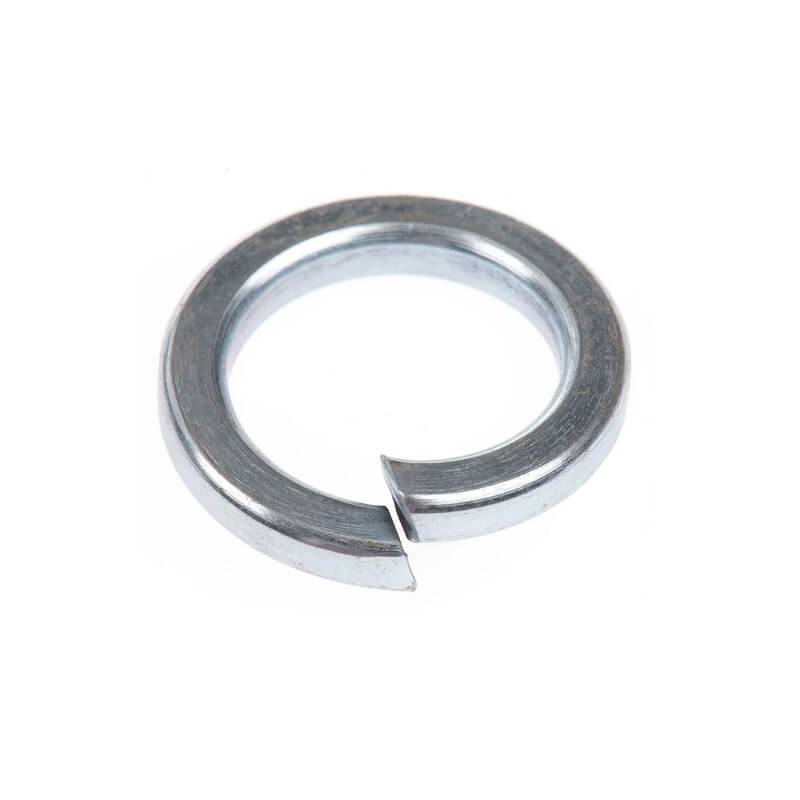
Split lock washers and spring washers maintain preload through elastic deformation. When compressed during fastener tightening, these washers store energy like springs. This stored energy continuously pushes the nut and bolt apart, maintaining tension even as the joint settles or components compress slightly over time.
Mechanism 2: Friction/Mechanical Interlock
Toothed lock washers create friction through mechanical interlock. The sharp teeth bite into both the fastener head/nut and the clamped surface, creating resistance to rotation. This isn't about spring tension, it's pure friction and mechanical interference.
The teeth create local stress concentrations in soft materials, potentially causing surface damage or material yielding that reduces long-term effectiveness. In hardened materials, the teeth themselves may deform, losing their locking capability.
Mechanism 3: Wedge Action (Nord-Lock Type)
Wedge-lock washers use paired washers with cam surfaces and radial teeth. When rotation begins, the cam surfaces wedge apart while the teeth bite into mating surfaces. This creates exponentially increasing resistance—the more rotation force applied, the harder the wedges grip.
Data box — Preload retention under vibration: According to a 2018 study by the Journal of Mechanical Design, different lock washer types showed these preload retention rates after 2000 vibration cycles:
- Wedge-lock washers: 93-97% preload retained
- Toothed lock washers: 75-85% preload retained
- Split lock washers: 45-65% preload retained
- No lock washer: 20-35% preload retained
These figures demonstrate that while all lock washers outperform plain assemblies, performance varies dramatically by type.
Real Examples — Automotive & Industrial Use Cases
Case Study 1: Automotive Engine Mount Fasteners
Engine mounts secure powertrains to vehicle frames while isolating vibration. The fasteners experience constant multi-directional vibration at varying frequencies. A major automotive manufacturer switched from split lock washers to wedge-lock washers on critical engine mount bolts after warranty claims revealed loosening issues.
Results: Warranty claims for engine mount fastener loosening decreased 87% after implementing wedge-lock washers. The improved vibration resistance maintained proper engine alignment and reduced noise, vibration, and harshness (NVH) complaints. This real-world validation demonstrates how lock washer selection directly impacts product reliability and customer satisfaction.
Case Study 2: HVAC Installations — Thermal Cycling Challenges
Commercial HVAC systems experience significant temperature fluctuations causing expansion and contraction in bolted joints. A facility maintenance manager reported recurring issues with equipment mounting bolts loosening on rooftop units subjected to temperature swings from -10°F to 140°F.
Solution: Replacing standard split lock washers with conical (Belleville) washers maintained constant spring force despite thermal cycling. The conical washers' greater deflection range accommodated expansion/contraction without losing preload. After two years, inspection showed zero fastener loosening compared to previous quarterly retightening requirements with split lock washers.
Types of Lock Washers — Best Uses & Limitations
|
Type |
How It Works |
Best Use |
Limitations |
|
Split (Spring) |
Spring tension maintains preload |
General-purpose low-vibration applications |
Flattens under high torque; poor vibration resistance |
|
External Tooth |
Teeth bite surfaces for friction |
Electrical grounding; soft surface materials |
Damages surfaces; not reusable |
|
Internal Tooth |
Compact teeth within bolt circle |
Small screws; limited space |
Lower torque capacity; limited effectiveness |
|
Wedge Lock |
Cam surfaces and radial teeth |
High vibration; critical assemblies |
Higher cost; requires paired washers |
|
Conical (Belleville) |
High spring rate maintains tension |
Thermal cycling; settling joints |
Requires specific installation force; can be damaged if over-compressed |
According to SAE International standards, material selection should account for environmental exposure, required spring force, and compatibility with fastener materials.
Common Myths Debunked
Myth: "Split lock washers always prevent loosening"
Reality: NASA's 1990 study titled "Self-Loosening of Threaded Fasteners" found that split lock washers provided minimal benefit against transverse vibration loosening—the most common cause of fastener failure in mechanical assemblies. The study concluded: "Split lock washers are ineffective against vibration loosening and may in some cases be detrimental to joint performance."
Why this matters: The spring action of split washers only resists tension loosening (bolt stretching). Transverse vibration causes rotation loosening through entirely different mechanics that spring tension doesn't address. Many professionals continue using split lock washers based on tradition rather than engineering evidence.
Myth: "Installation order doesn't matter"
Truth: Lock washer orientation and position critically affect performance. Toothed washers must orient with teeth against the rotating component (nut or bolt head), not the stationary surface. Installing teeth against stationary surfaces wastes their locking mechanism—the teeth need to bite into the component that would rotate during loosening.
Installation sequence matters: For assemblies using both flat and lock washers, the lock washer goes directly under the rotating component (nut or bolt head), with the flat washer between lock washer and work surface. Reversing this order prevents the lock washer from functioning properly.
Most fastener guides present lock washers as universal vibration solutions. Industry testing reveals significant limitations that marketing literature ignores. Split lock washers work poorly under high preload—they flatten permanently, losing all spring action. In critical applications (aircraft, medical devices, heavy machinery), engineers specify thread lockers, prevailing torque nuts, or mechanical locking devices instead of relying on lock washers alone.
When To Use (and Not Use) Lock Washers
Use lock washers when:
- Moderate vibration resistance needed without critical safety implications
- Environmental or regulatory factors prohibit chemical thread lockers
- Frequent assembly/disassembly makes permanent lockers impractical
- Budget constraints limit use of premium locking fasteners
- Electrical grounding requires toothed washer surface bite
Don't use lock washers when:
- Critical safety applications require guaranteed vibration resistance (use prevailing torque nuts, thread lockers, or mechanical locks)
- Surfaces cannot tolerate damage from teeth (use alternative locking methods)
- Extremely high torque applications will permanently flatten spring-type washers
- Joints experience primarily transverse vibration (split lock washers ineffective)
- Repeated assembly/disassembly is required (lock washers degrade with reuse)
Alternatives to consider:
- Thread lockers (chemical): Anaerobic adhesives providing superior vibration resistance
- Prevailing torque nuts (nylon insert, distorted thread): Mechanical resistance to rotation
- Wedge-lock systems: Premium paired washers for critical applications
- Safety wire: Positive mechanical lock preventing rotation
- Tab washers: Bent tabs physically preventing nut rotation
How to Install & Maintain Lock Washers
Installation steps:
- Clean mating surfaces: Remove oil, dirt, and corrosion ensuring proper washer seating
- Position lock washer correctly: Place directly under rotating component
- Orient teeth properly: Toothed washers must have teeth toward rotating component
- Add flat washer if needed: Position flat washer between lock washer and work surface
- Tighten to specification: Follow torque requirements—over-tightening flattens split washers
Torque recommendations (carbon steel grade 5 bolts in steel):
|
Bolt Size |
Torque Range (ft-lbs) |
Notes |
|
1/4"-20 |
5-8 |
Monitor for washer flattening |
|
5/16"-18 |
11-17 |
Split washers may flatten near upper range |
|
3/8"-16 |
20-31 |
Consider wedge locks for critical applications |
|
1/2"-13 |
50-75 |
Split washers often inadequate; use alternatives |
|
5/8"-11 |
95-140 |
Premium locking systems recommended |
Inspection checklist:
- Visual deformation: Check if split washers have flattened
- Tooth condition: Verify toothed washers haven't lost tooth definition
- Corrosion: Look for rust or corrosion compromising spring properties
- Surface damage: Assess if tooth marks indicate proper engagement
- Fastener tightness: Verify fastener hasn't loosened despite lock washer
Replacement guidelines: Lock washers are single-use components in critical applications. The initial installation permanently deforms the washer. Reusing lock washers in safety-critical or high-vibration applications risks failure. In non-critical applications where budget matters, inspect carefully before reuse—any visible permanent deformation requires replacement.
Conclusion
Understanding how does a lock washer work reveals these fasteners' real capabilities and limitations. Split lock washers provide spring tension maintaining preload against settling but perform poorly against vibration loosening. Toothed washers create friction through surface bite but damage mating surfaces. Wedge-lock systems offer superior performance through cam action but cost significantly more.
Ready to source quality lock washers and fastening solutions? Visit Nutty to explore our complete selection of lock washers in various types and materials engineered for reliable performance.
Frequently Asked Questions
What makes a lock washer work?
Lock washers work through three primary mechanisms: spring tension maintaining bolt preload, friction from teeth biting into surfaces, or wedge action creating increasing resistance to rotation. Split washers compress during tightening, storing energy that maintains tension as joints settle. Toothed washers' sharp edges bite into both the fastener head and clamped surface, creating mechanical interlock resisting rotation. Wedge-lock systems use cam surfaces that wedge apart if rotation begins, exponentially increasing resistance.
When should you not use a lock washer?
Don't use lock washers in critical safety applications requiring guaranteed vibration resistance. Instead use prevailing torque nuts, thread lockers, or mechanical locks. Consider alternatives when repeated assembly/disassembly is required, as lock washer effectiveness degrades with each reuse.
What is the proper way to use a lock washer?
Position the lock washer directly under the rotating component (nut or bolt head), not between the work surface and a flat washer. Orient toothed washers with teeth toward the component that rotates during loosening. When using both flat and lock washers, sequence them: bolt head/nut, lock washer, flat washer, and then work surface. Tighten to manufacturer's torque specifications, as over-tightening flattens split washers, eliminating spring action.
How does a washer lock work?
A washer lock works by creating resistance to fastener rotation or maintaining constant tension in the joint. The specific mechanism depends on washer type. Split (spring) washers function as springs—when compressed during tightening, they store elastic energy that maintains bolt preload even as joints settle slightly. Toothed washers work through friction—sharp teeth bite into the fastener head/nut and work surface, creating mechanical interlock resisting rotation. Wedge-lock washers use paired components with cam surfaces and radial teeth—if rotation begins, the cam surfaces wedge apart while teeth dig in, creating exponentially increasing resistance.