
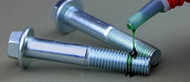
What Is Thread Locker & How Do They Work?
Jan 15th 2026
Loose mechanical fasteners are one of the most common causes of mechanical failure. Vibration, repeated shock loads, and thermal expansion can gradually cause bolts, nuts, and screws to loosen over time, even when they were installed correctly. Left unchecked, this can lead to leaks, misalignment, noise, or complete assembly failure.
So, what is a thread locker, and why is it used so widely across industries? Thread lockers are anaerobic adhesives specifically formulated to lock threaded mechanical fasteners in place, helping assemblies remain secure under vibration and temperature changes once oxygen is excluded during assembly.
Thread locking compounds are used extensively in automotive systems, industrial machinery, appliances, and equipment where reliability and serviceability both matter.
Established in 1977, Nutty brings over 48 years of experience solving fastening challenges and works closely with engineers and maintenance teams to help select the right thread locker for each application.
What Is a Thread Locker? Explained Simply
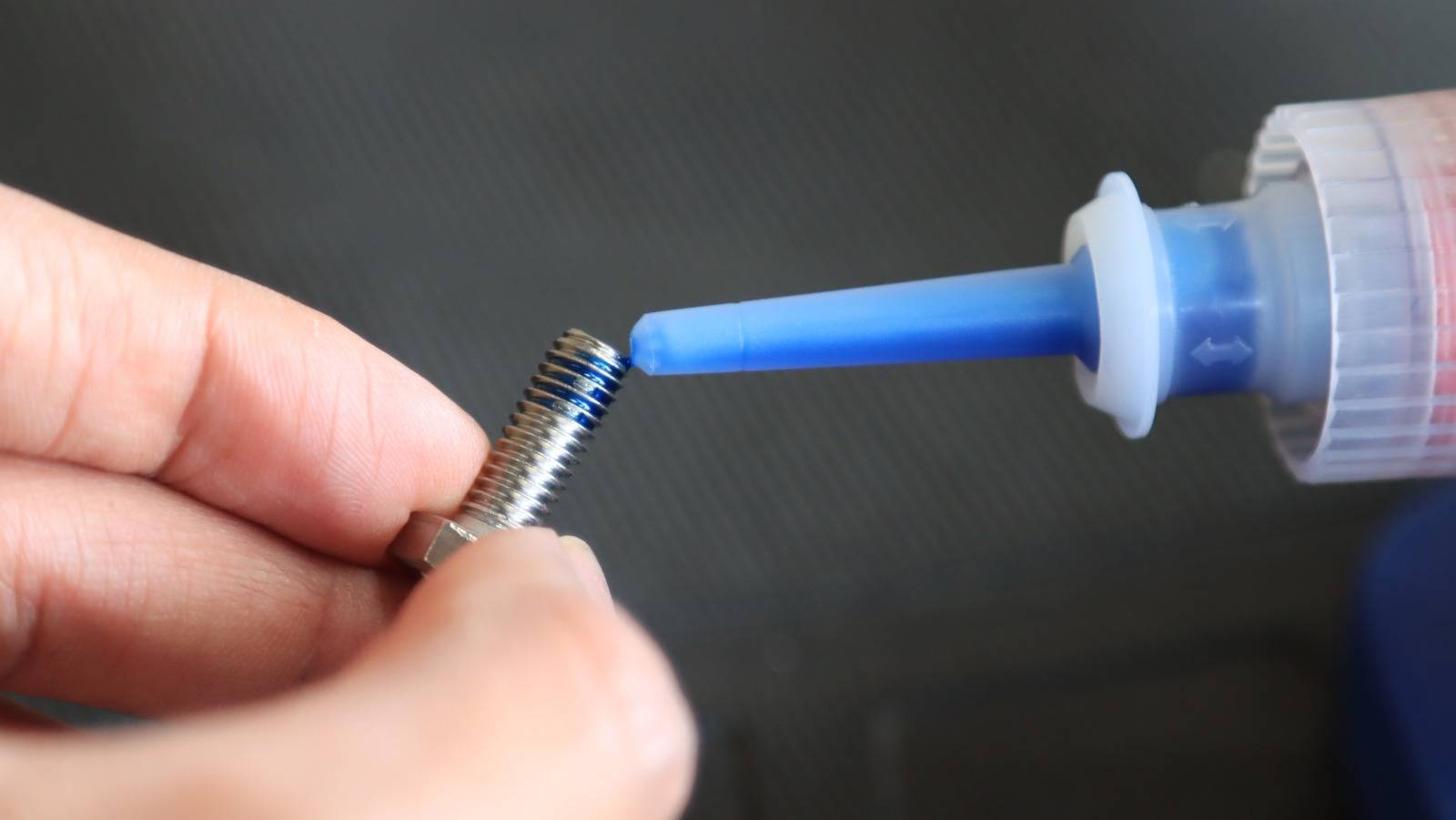
A thread locker (or thread-locking fluid) is a single-component adhesive applied directly to the threads of fasteners before assembly. Once cured, it fills the microscopic gaps between threads, creating a locking effect that resists loosening, leakage, and corrosion (rust).
Thread lockers differ from general adhesives because they are specifically designed for threaded fasteners, not surface bonding. They also differ from sealants, which focus primarily on preventing fluid leaks rather than resisting vibration.
Thread Lockers vs. General Adhesives vs. Thread Sealants
|
Feature |
Thread Lockers |
General Adhesives |
Thread Sealants |
|
Purpose |
Prevent loosening |
Bond surfaces |
Prevent leaks |
|
Cure mechanism |
Anaerobic |
Air or chemical |
Air or pressure |
|
Serviceability |
Removable by strength |
Often permanent |
Removable |
|
Common applications |
Bolts, nuts, screws |
Panels, joints |
Pipe threads |
Thread lockers are ideal when fasteners must stay secure but still be removable when maintenance is required.
The Science Behind Thread Lockers
So, how does a thread locker work?
As Alan Hernandez, M.S. Thesis, University of South Florida, explains in his study, "Thread locking anaerobic adhesives are single-component anaerobic adhesives that consist of a resin that hardens to a solid in the presence of metal ions and absence of oxygen."
How Thread Lockers Cure
When threadlocker or thread-locking fluid is applied to threads and the fastener is assembled, oxygen is excluded from the compound. Contact with metal ions on the fastener surface triggers a chemical reaction that causes the adhesive to polymerize and harden.
This curing process locks the fastener by filling the voids between threads.
Initial fixture strength develops relatively quickly, but full curing time varies based on temperature, material, and formulation. Understanding this distinction is critical for reliable performance.
A NASA study confirms unsecured fasteners lose ALL preload in 100-200 vibration cycles (5-10 seconds)—threadlockers fill this exact gap.
Threadlocker Strength Categories Explained
Thread lockers are often identified by color, although color coding is not standardized across all manufacturers.
- Low-Strength Threadlocker (typically purple)
Designed for small fasteners and specific applications requiring frequent adjustment. These formulations offer low breakaway torque, allowing easy removal with standard hand tools. Common in electronics and light assembled parts. - Medium Strength (typically blue)
Medium-strength thread locker provides strong resistance to vibration while maintaining moderate breakaway torque, making removal possible with hand tools. Common in automotive and machinery applications. - High Strength (typically red)
Intended for permanent assemblies. These products create a near-permanent bond with high breakaway torque and often require heat to reduce removal torque. Used in heavy machinery and critical joints.
Selecting the right strength is mission-critical for both safety and serviceability factors. Use threadlockers accordingly.
Temperature and Chemical Resistance
Most threadlockers maintain performance across harsh automotive environments, as verified by standardized testing in manufacturer technical data sheets (TDS). For example, standard formulations handle -65°F to 300°F continuous service, while high-temperature variants reach 450°F.
Here's real test data from Permatex & Loctite Threadlockers TDS (aged under specified conditions):
|
Environment |
Temperature |
Strength Retention |
Test Duration |
|
Brake Fluid |
22°C / 72°F |
100% |
1000 hrs |
|
Water / Glycol Coolant |
87°C / 189°F |
85% |
1000 hrs |
|
Antifreeze |
87°C / 189°F |
60% |
500 hrs |
|
Motor Oil (Transmission proxy) |
125°C / 257°F |
75% |
1000 hrs |
|
Hot Air Aging |
150°C / 302°F |
45% (typical) |
500 hrs |
Motor oil retains 75% strength after 1000 hr at 125°C, while antifreeze drops to 60% at 87°C. Always verify your specific product's TDS for fluid exposure.
When to Use Thread Lockers vs Other Adhesives
Thread lockers are used on threaded assemblies exposed to vibration, force, or movement where fasteners must stay secure but still be removable. They prevent loosening without permanently bonding parts together.
Structural adhesives are better for bonding flat surfaces where disassembly is not required. Sealants are used mainly to prevent fluid leaks rather than resist vibration.
In practice, thread lock is commonly used on:
- Automotive suspension bolts to maintain clamp load
- Industrial stamping machinery exposed to shock
- Electronics assemblies where small screws loosen over time but still need service access
Case Study
According to a case study published by Assembly Magazine, Saleen Automotive Co. faced recurring torque loss in engine fasteners when relying solely on mechanical locking methods.
Vibration force and thermal cycling caused bolts to loosen over time, leading to additional inspections and maintenance checks on the production line.
After introducing medium-strength thread-locking compounds during assembly, Saleen observed improved torque retention during vibration testing and a measurable reduction in fastener-related maintenance interventions.
The change required no redesign of components or torque specifications, improving reliability while maintaining production efficiency.
How to Apply Thread Lockers Correctly
Knowing how to use a thread locker properly is just as important as choosing the right type.
Step-by-Step Guide
- Step 1: Clean the threads
Remove oil, dirt, and debris. Contaminated surfaces can interfere with curing. - Step 2: Apply threadlocker
Use a small amount along the threads. Excess product does not increase locking strength. - Step 3: Assemble and torque
Tighten fasteners to specification using hand tools or power tools. - Step 4: Allow full cure
Let the assembly rest for the recommended curing time before applying a load
Dos & Don’ts
|
Do |
Don’t |
|
Clean threads before application |
Overapply threadlocker |
|
Match strength to application |
Mix with anti-seize |
|
Allow full cure time (even on inactive metals) |
Load fasteners too early |
|
Use proper PPE |
Ignore product instructions |
Choosing the Right Thread Locker for Your Project
Choosing the right type of thread locker requires evaluating the full operating environment, not just strength.
Here's what to consider:
- Strength grade and removability needs
- Temperature exposure and heat cycling
- Environmental conditions, such as oil or corrosive elements and properties
- Material compatibility of fasteners
- Maintenance and service intervals
A quick selection checklist recommended by experts at Nutty's:
- Small fasteners or frequent adjustment → Low strength
- General-purpose vibration resistance → Medium strength
- Permanent or critical joints → High strength
- High heat or harsh environments → Specialty formulations
What Others Don’t Tell You
- In its history, color coding varies by manufacturer because strength classifications, formulations, and branding differ. Meaning, red, blue, and purple can represent different performance levels across brands.
- Thread lock should never be mixed with anti-seize. Anti-seize acts as a lubricant and can prevent proper curing, reducing bonding strength.
- Thread lock is not always appropriate for safety-critical or aerospace assemblies without engineering approval.
- Many users confuse initial fixture strength with full cure. Full cure often takes significantly longer and should be respected before loading assemblies.
Expert Tips from Nutty.com
Based on real-world experience, Nutty’s technical team recommends:
- Prioritizing surface preparation over product strength
- Avoiding over-application to ensure proper curing
- Allowing full cure time before placing assemblies into service
- Selecting products based on actual operating conditions, not assumptions
Nutty's team believes proper surface prep and full cure time prevent virtually all preventable fastener failures.
Frequently Asked Questions
What is a thread locker, and why is it used?
A thread locker is a liquid adhesive applied to threaded fasteners to prevent loosening caused by vibration, shock, and thermal expansion.
How do thread lockers work?
Thread lockers work through an anaerobic curing process. Once applied and confined between metal threads, oxygen is excluded, and the compound cures, forming a strong bond that locks the fastener in place.
Are thread lockers permanent?
Not all thread lockers are permanent. Low- and medium-strength thread lockers are designed for removal using standard hand tools, while high-strength formulations may require localized heat for safe fastener removal.
When should I use a thread locker instead of a regular adhesive?
Thread lockers are specifically designed for threaded assemblies where future disassembly may be required. Regular adhesives are better suited for bonding flat surfaces, while the right threadlockers maintain serviceability and vibration resistance.
Conclusion
Thread locker plays a critical role in keeping threaded fasteners secure under real-world conditions such as vibration, temperature changes, and repeated load cycles. By understanding how thread lockers work, their strength options, and correct application methods, users can prevent failures without overengineering assemblies.
Choosing the right product depends on fastener size, material, operating temperature, and service requirements.
For guidance on selecting and applying the right thread-locking solution, contact Nutty’s technical support team for application-specific recommendations.